
Quick answer: scan from big tells to small tells
As the seeker in MECCHA CHAMELEON, checking every object with the same attention wastes the timer. Start with a wide scan for large color patches that do not fit the room, then look for round outlines, mismatched shadows, broken patterns, and suspicious gaps around props. Only after that should you inspect corners, boxes, pillars, dark edges, and other high-probability hiding spots.
Hiders try to match color, shape, and timing. Seekers should read the opposite signals. A body can be painted well but still leave an outline that bends against a straight wall, a shadow that is too bright, a pattern that stops halfway, or a sudden stillness after movement.
This page treats the seeker role as a process of eliminating visual contradictions. That makes your finds more repeatable in friend matches, streams, and casual rounds because you can explain why a spot looked wrong instead of relying on luck.
Use a scan order so the timer works for you
The basic route is wide first, narrow second. If you start by inspecting tiny props, you can miss an obvious large silhouette until it is too late.
| Order | What to check | Why it matters |
|---|---|---|
| Large color zones | Look across walls, floors, and shadows for a patch that is too bright, too saturated, or too flat. | Color and brightness errors can be spotted from far away and create the first shortlist. |
| Round outlines | Find curves or body shapes that interrupt straight scenery lines, corners, or box edges. | Even good paint often leaves the player silhouette readable. |
| Shadow and contact | Check whether the body appears grounded and whether the shadow matches nearby surfaces. | Hiders can copy color but often fail to match depth, shadow, and placement. |
| Common edges | Inspect corners, box sides, pillars, dark edges, and screen borders after the first scan. | Strong hiders gravitate toward places that break their outline. |
Read shape, shadow, and pattern before exact color
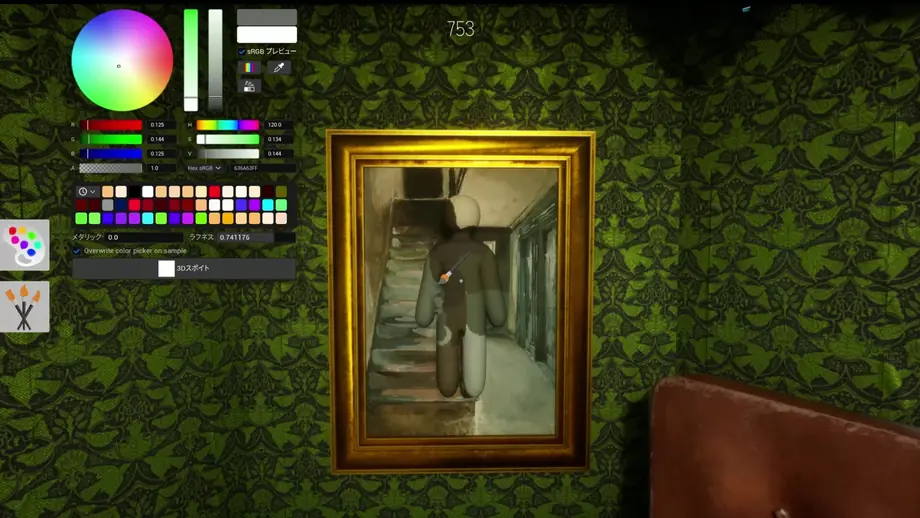
Beginner seekers often look only for players whose body color is obviously wrong. Better hiders will get close enough that color alone is not reliable. At that point, look for scenery rules that break: a wall pattern suddenly stops, a box edge bends, a shadow has the wrong weight, or a floor line hides an unexpected curve.
The most important areas are prop edges and floor-wall transitions. Hiders use them because they split the body outline. Seekers should use the same logic in reverse and spend more attention where the stage gives players natural cover.
You do not need to stare at every corner. If a wide scan shows no color, shadow, or shape problem, move quickly. Spend time only where at least one tell gives you a reason.
Build routes by suspicion, not by room order
Instead of walking the same path every round, combine the stage layout with hider psychology. Remove obvious large candidates first, then collapse into the smaller hiding spots.
Scan broad surfaces
Walls, floors, and bright backgrounds reveal large mismatches before props do.
Prioritize edges
Corners, steps, and box sides are where hiders can split their outlines.
Change depth by time
Early rounds allow broad scans; late rounds require only high-probability checks.
Look back once
Returning to a cleared area can catch a hider who moved after feeling safe.
Apply pressure without panic-clicking
The seeker role creates urgency, but random clicking usually burns time. Apply pressure with intent: move near a suspicious edge, briefly look elsewhere, cover the escape route, then return. Good hiders often stay still until they feel forced to move.
When you cannot confirm a player, reduce the candidate list instead of expanding it. If a spot has no color, shape, shadow, or movement reason, leave it. If it has two tells, commit and inspect it from another angle.
Approach with a reason
Move toward candidates that have a color, outline, shadow, or movement clue.
Watch the escape route
Do not stare only at the hiding spot; hiders often reveal themselves when leaving it.
Return after passing
A second look can catch players who relax and move after you leave.
Practice routine for better seeking
The seeker role improves quickly when you name each mistake. Track one missed tell per round instead of trying to memorize every hiding spot.
Spend five seconds on the whole room
Before inspecting details, read the broad color, shape, and shadow balance.
Limit the shortlist to three spots
Keep only candidates with a concrete color, outline, or shadow reason.
Say why you found someone
Naming the tell makes the next round repeatable.
Play hider too
When you hide, you learn where seekers should look first.
FAQ