
How many MECCHA CHAMELEON maps are there?
As of July 20, 2026, the named official roster can be tracked as 10 maps: Backrooms, Hide-and-Seek Mansion, Indoor Country, Osaka, Penguin Hotel, Sewer, Sugarland, Egypt, Death Burger, and Greece. The first seven appear in the established Steam community map guide, while the official Steam news feed added Egypt, Death Burger, and Greece in later updates. The game menu and current official announcements remain the final authority if a map is renamed, rotated, or changed.
A useful MECCHA CHAMELEON maps guide should do more than repeat names. Every stage changes the value of paint matching, shadow control, object spacing, elevation, and escape routes. Hiders need surfaces that make their body read as part of the environment. Seekers need a scan order that catches the largest visual contradiction before time is wasted on tiny color differences.
This page focuses on official maps and transferable map strategy. Steam Workshop maps are community-created content with separate subscription, dependency, moderation, and troubleshooting questions, so they remain a supporting topic rather than the primary intent here.
Play one private round without chasing a win. Mark the main seeker routes, strong color families, obvious silhouette traps, vertical sightlines, and two safe rotation paths. That five-minute survey improves both roles.
MECCHA CHAMELEON official map list
The descriptions below are practical environment classifications, not claims about hidden internal map rules. Use them to decide what to test when the current build loads the stage.
Backrooms
Repeating corridors and similar surfaces reward disciplined route memory. Identical-looking corners can make seekers rescan space and can tempt hiders into obvious wall-edge shapes.
Test: corridor intersections, doorway silhouettes, repeated color panels.Hide-and-Seek Mansion
Rooms, furniture, thresholds, and layered sightlines create many plausible object relationships. A good hide must survive more than one doorway angle.
Test: entry routes, furniture spacing, stair and balcony visibility.Indoor Country
The mixed indoor theme favors players who compare broad color zones before choosing a surface. Small decorative areas may look safe but expose an unnatural body outline.
Test: dominant room colors, open floor crossings, prop density.Osaka
Dense urban visual information can disguise color changes but also creates strong perspective lines. Seekers should use storefront edges, lanes, and repeated architecture as reference grids.
Test: long street views, signage contrast, corners and elevation.Penguin Hotel
Hotel-like rooms reward methodical floor and room clearing. Hiders should avoid spaces where one object breaks an otherwise orderly layout.
Test: room sequence, hallway visibility, symmetrical furnishing.Sewer
Dark passages, pipes, damp surfaces, and limited color families make shadow and silhouette more important than perfect paint. Motion is easier to notice against simple geometry.
Test: pipe intersections, tunnel exits, shadow boundaries.Sugarland
Bright colors and playful shapes increase camouflage options, but excessive contrast can expose a nearly correct match. Large shapes should be checked before small hue differences.
Test: saturated color zones, curved props, high-contrast edges.Egypt
The later-added Egypt map introduces sandy palettes, stone geometry, open sightlines, and strong light-shadow transitions. Flat walls are not automatically safe when the outline remains readable.
Test: columns, raised platforms, open courtyards, shadow direction.Death Burger
Added in v2.8.0, Death Burger uses a themed environment where bold shapes and food-service objects can create both convincing disguises and obvious spacing errors.
Test: counters, kitchen routes, repeated props, customer sightlines.Greece
Added in v3.0.0 on July 20, 2026, Greece is the newest named official map in the checked news feed. Learn its bright surfaces, outdoor views, architecture, and vertical routes before relying on older tier lists.
Test: white surfaces, blue accents, open angles, stairs and roofs.Four map types and the decisions they reward
Individual maps mix several patterns, but this comparison gives both roles a repeatable first read instead of a memorized hiding spot that fails after an update.
| Map pattern | Hider priority | Seeker priority |
|---|---|---|
| Corridor and room networks | Choose a surface that survives the main doorway angle and keep a second rotation route. | Clear rooms in a fixed order and record which branches have already been checked. |
| Open urban or outdoor spaces | Break long sightlines and avoid moving across empty ground after the seeker has a view. | Scan large silhouette errors first, then use architecture as a grid for smaller checks. |
| Dark industrial spaces | Match shadow direction and body outline; paint alone cannot hide movement or depth. | Watch tunnel exits, pipe breaks, unnatural shadows, and objects that move against simple geometry. |
| Bright themed environments | Use the dominant color family without becoming the only shape of its kind in the scene. | Compare repeated props, spacing, edge contrast, and shapes before judging exact hue. |
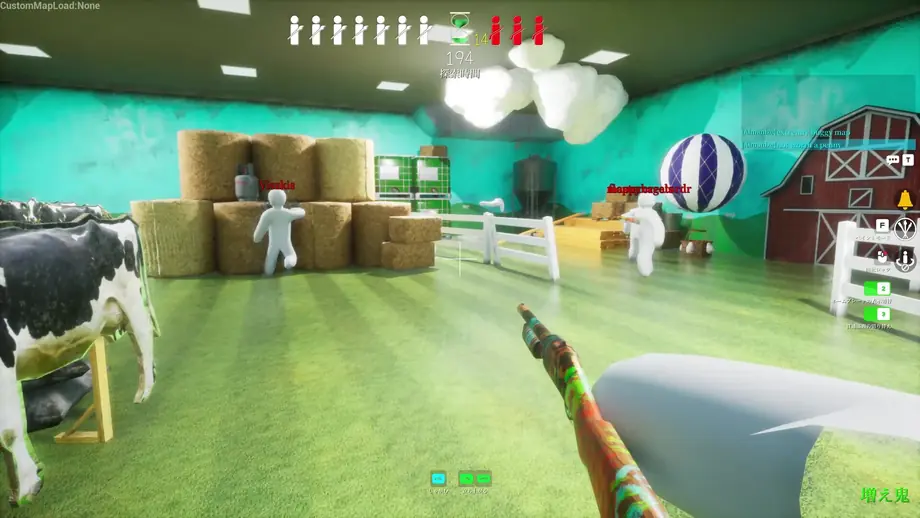
A five-step map routine for hiders and seekers
The same routine works on a new official map, a recently updated stage, or a trusted Workshop map. It creates transferable map knowledge instead of one brittle trick.
Read the dominant palette
Identify the two or three color families that cover most safe surfaces. Hiders should choose a family before a location; seekers should notice colors that appear in only one suspicious patch.
Mark the main approach routes
Watch where seekers enter rooms, turn corners, climb stairs, and cross open areas. A hiding spot is only strong if its silhouette survives the likely camera angle.
Compare shape and spacing
Ask whether the body resembles nearby props or architecture and whether the gap around it looks natural. Seekers should check broken repetition and lonely shapes before tiny paint errors.
Plan one rotation, not constant movement
A short controlled move can escape a known route, while repeated movement creates sound and visual evidence. Choose the trigger and destination before the seeker arrives.
Review the map after the result
Record the map, role, version, hiding surface, seeker route, and why the play succeeded or failed. A short note turns one match into a reusable map lesson.
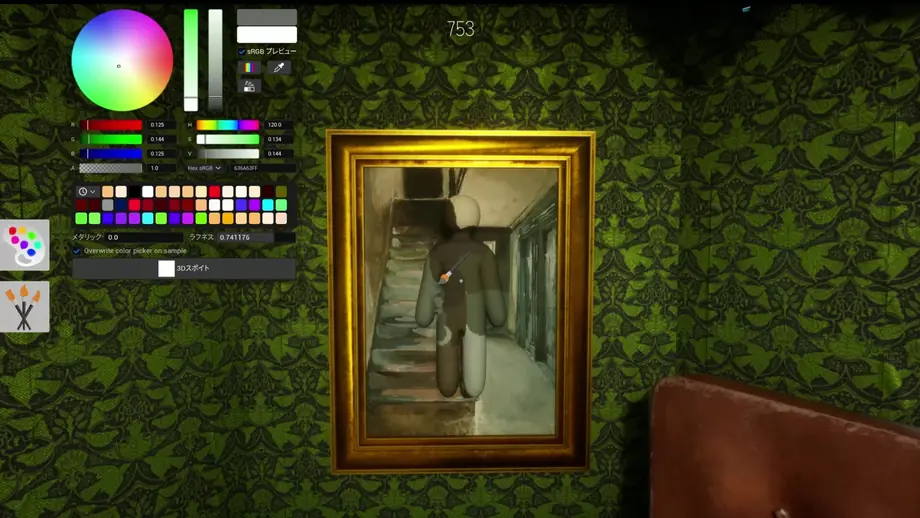
Official maps and Steam Workshop maps are different intents
Official maps arrive with the game or an official update and are the stable baseline for general strategy. Workshop maps are community items subscribed through the Steam Community Hub. They may depend on the creator, update timing, room setup, and other subscriptions.
The phrase MECCHA CHAMELEON workshop maps has its own demand, but creating a second installation article here would duplicate the existing mods guide. Use that guide for subscribing, checking app 4704690, testing in a private room, removing broken items, and separating maps from cheats.
Latest checked: 3.3.2 (July 30, 2026)
Official Steam news was checked on July 30, 2026 and the latest listed version was 3.3.2. Version 3.0.0 remains the historical Greece-map update; use the update-history page for current patch details.
MECCHA CHAMELEON is a game guide topic, not a direct-download page. This site does not host installers, map files, or unofficial executables. Use Steam for the game and the official Community Hub for Workshop subscriptions; do not treat third-party map downloads as verified because they use the game name.
- Confirm the version shown by Steam
- Check the official news hub for a new map
- Separate official and Workshop content
- Test unfamiliar maps in a private room
- Recheck old map rankings after updates
MECCHA CHAMELEON maps FAQ
How many maps are in MECCHA CHAMELEON?
The checked named roster contains 10 official maps as of July 20, 2026. Greece is the newest map in version 3.0.0. The current game menu and official news remain the final authority.
What is the newest MECCHA CHAMELEON map?
Greece is the newest named official map in the checked Steam news feed. It was added with version 3.0.0 on July 20, 2026.
Are Workshop maps included in the official map count?
No. Workshop maps are community-created subscriptions and can change independently. Keep them separate when comparing map counts or learning the standard roster.
What is the best MECCHA CHAMELEON map for beginners?
There is no official beginner ranking. Start with a map whose routes and repeated objects are easy for your group to read, then practice both hider and seeker roles under the same room rules.
Can I download MECCHA CHAMELEON maps without Steam?
This site does not verify third-party map files. Use the official Steam Community Hub and its Subscribe flow for Workshop content instead of unknown executables or file hosts.
Official and community references
- MECCHA CHAMELEON on Steam — Official store, screenshots, platform information, and current game context.
- Official Steam news hub — First-party version and map update announcements, checked July 20, 2026.
- Steam Community map guide — Community-created reference for the established seven-map roster; not an official publisher guide.
- MECCHA CHAMELEON Workshop — Official Community Hub location for user-created Workshop items.
Continue with these guides
Hiding guide
Turn map colors, silhouettes, sightlines, and movement timing into stronger hiding decisions.
Seeker guide
Build a repeatable scan route for rooms, corridors, props, shadows, and color breaks.
Mods and Workshop guide
Subscribe to community maps safely and separate Workshop content from cheats or unknown downloads.
MECCHA CHAMELEON update history
Check version 3.3.2, recent patch notes, gameplay impact, and the official Steam update path.